
Postpartum Period Products: What's Best For Your Body?

Updated: Oct 1
Vaginas are like snowflakes—each one is unique. There’s no “right” or “wrong” shape or style, and that means there isn’t one postpartum period product that’s going to work perfectly for every person.
And after having a baby, you may notice that your vagina feels—and sometimes looks—different than it did before pregnancy or birth.
Maybe your tampon suddenly feels uncomfortable. Maybe your menstrual cup that used to fit perfectly now leaks or feels like it’s pulling. Maybe you’re dealing with pressure, heaviness, a little prolapse, pelvic floor symptoms, or just a general feeling of “Whoa. This is different.”
If that sounds familiar, you’re not alone.
Your postpartum body is adapting to a lot of changes, and figuring out which period products after birth feel comfortable can take some trial and error.
One of the questions I hear is:
“Okay, but what the heck am I supposed to use for my period now?”
So let’s talk about your postpartum flow catchers.
(Doesn’t that sound nice? Like a dream catcher? Okay, maybe my mind is just a little out there. Moving on…)
First, remember: you don't have to put anything inside your vagina.
If inserting something feels uncomfortable, creates pressure, causes leaking, or just doesn’t feel right anymore, start with the simplest option: external menstrual products.
That might mean disposable pads, reusable/washable pads, or period underwear.
Period underwear can be a great option because there’s no insertion and, depending on the brand and style, they can feel less bulky than a traditional pad.
They can also be particularly nice on lighter-flow days or when you simply want to give your vagina a break.
Reusable pads are another option. They’re generally less expensive upfront if you’re willing to wash and reuse them.
And I’m not here to shame disposable pads or liners. There are plenty of times when convenience wins—traveling, camping, postpartum chaos, or anytime washing and laundry aren't exactly convenient.
The best product is the one that works for your body and your life.
Then there are tampons.
Oh mama, does the selection run long here.
If you’ve always been a tampon person, you may be able to continue using them postpartum. But you may also discover that the tampon you used before pregnancy suddenly feels completely different.
That’s because your anatomy can change after birth.
You might find that one tampon feels too long, another feels uncomfortable, or you have trouble keeping one in place. If you have pelvic organ prolapse or changes in pelvic floor support, you may be particularly aware of where the tampon sits and how it feels.
This is where a little trial and error can be helpful.
Personally, I’ve preferred shorter tampons because of how they feel with my own anatomy and prolapse. But my body isn't your body, so what works for me may not be what works for you.
And that's really the theme here:
Don’t assume that because a product worked before pregnancy, it will automatically be your best option postpartum.
What about menstrual cups?
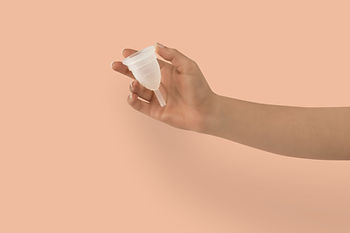
Menstrual cups can be fantastic for some people, but they aren't automatically a great postpartum choice for everyone.
I personally love the idea of cups, but with my own prolapse, the suction during removal didn't agree with me. I also found that having a cup in could make bowel movements more challenging.
Yes, I know you're supposed to break the suction before removing a cup. I did that. But with my particular anatomy, it was still tricky.
And here's an important distinction:
That's my experience—not a universal rule about menstrual cups.
Cup shape, firmness, length, diameter, and your individual anatomy can all affect how a cup feels. A cup that is uncomfortable for one person may be fantastic for someone else.
So if you've tried one cup and hated it, that doesn't necessarily mean all cups are off the table.
But if you're experiencing pain, significant pressure, difficulty removing the cup, or worsening pelvic floor symptoms, that's a good reason to stop experimenting on your own and get some personalized guidance.
And then we have menstrual discs.
Discs are currently one of my favorite options to consider for people who want an internal menstrual product but don't love the way a cup or tampon feels.
Unlike menstrual cups, discs don't rely on the same type of suction to stay in place. They sit differently in the vaginal canal, with the rim positioned behind the pubic bone.
For some people with prolapse or changes in pelvic floor support, this can make a disc feel more secure than a tampon or cup.
I've also had patients who find that a disc works really well during exercise because it stays in place without the same sensation of something shifting around.
But—and this is important—a disc isn't automatically the answer for prolapse.
I've also worked with people whose anatomy caused a disc to shift or slide out.
Again, your anatomy matters.
So…what's the best postpartum period product?
Honestly?
The one that feels comfortable, stays where it's supposed to, doesn't aggravate your symptoms, and fits your lifestyle.
And sometimes figuring that out takes some experimentation.
Because here's the thing: if you're struggling with period products after birth, it may not actually be a product problem.
Your body has changed. Your pelvic floor may be functioning differently. And if you're dealing with prolapse, pressure, heaviness, leaking, or other pelvic floor symptoms, those changes can affect what feels comfortable and what stays where it's supposed to.
For example, if you notice:
A tampon or cup suddenly feels uncomfortable after having a baby
Internal products don't stay in place anymore
You feel vaginal pressure or heaviness
You feel like something is “falling out”
You have leaking with exercise
You have trouble inserting or removing a menstrual product
Bowel movements feel different
Sex feels different or uncomfortable
You aren't sure whether what you're experiencing is “normal” postpartum
Those are all things we can talk about.
Your postpartum body doesn't come with an instruction manual.
And you shouldn't have to Google your way through every weird, uncomfortable, or confusing change.
If you're wondering whether what you're experiencing is related to your pelvic floor, prolapse, recovery from birth, or simply finding products that work with your new anatomy, I can help you sort through what's going on and figure out your next steps.
We can talk through your symptoms, your goals, and what's happening in your body so you can feel more confident about what you're doing—not just during your period, but throughout your postpartum life.
Because your postpartum body isn't broken.
It’s just different. And you deserve to understand it.


Comments